Showing posts with label emr. Show all posts

Friday, October 14, 2016

What can the healthcare system really learn from Uber and Lyft: Increased Automation and Smarter Regulations can go a LONG way!

A new Study found that doctors believe EMRs may help with reporting, but that they do NOT help with outcomes. Furthermore, they note the downsides of EMRs include increased costs and distracting from direct patient care. 

However, I think an equally guilty culprit is the over-regulation of our medical system- including 
(1) The amount and detail in which everything needs to be documented, and 
(2) The amount of extra work that doctors now need to "review and sign off on". 

On one hand, EMRs actually may help with doing some of this documentation (if we were still on paper, there is no way docs could do all the documentation required these days!). On the other hand, EMRs have also caused extra work due to their inflexible design requiring both multiple clicks to find or complete tasks, as well as enforcing a "top of license" mentality that means a doctor has to be involved with EVERYTHING.

Meanwhile, both state and federal regulations make it incredibly hard to automate or delegate even routine primary care... we are so behind other industries, and even behind other areas of healthcare! For exampe, we somehow allow AUTONOMOUS CARS and SURGICAL ROBOTS, but we have regulations that don't allow a computer to automatically handle refill requests, order labs or manage minor medication changes?!?  We think making a well trained and time-strapped primary care doctor scour an EMR and do refills at the end of the day is better than using automation to handle this type of work?  

Fortunately, there are companies like healthfinch building out tools to work within EMRs to delegate this type of routine clinical work - meaning they automate everything to the last foot... but still have to hand it off to a nurse or similar professional to click on the final button.  The result is that: 
1. It takes work off the doctor's plate (the Swoop Refill Product alone saves them 20-30 minutes a day). 
2. It makes the delegation process to nurses much more efficient (usually 3-4X more efficient, which means you only need 3 nurses to support a task vs. 12 nurses... saving millions a year, and allowing you to deploy those nurses elsewhere)
3. It improves the quality of care for the patient... both in making the turn-around time faster, and in ensuring that evidence based rules are used to make a decision

But ideally- we really need to see a regulatory system that allows us to automate the process fully!  Then instead of complaining about EMRs - docs and nurses will actually love how it make their lives easier (while also improving patient care in a variety of ways), rather than feel like the EMR is the hammer bringing down the pain on them!

I was pleased to see the recent CMS announcement that they are lauching a pilot initiative with the goal to "reshape the physician experience by reviewing regulations and policies to minimize administrative tasks and seek other input to improve clinician satisfaction".  Amen!

The other, potentially simpler, idea I would recommend is simply to provide more guidance on current regulations around licensure. For example, every state has regulations about who can do what in a healthcare setting - often convoluted language that makes it unclear if a nurse or medical assistant can do nothing, something or many things based on protocols and standing orders.

Unfortunately, every hospital system has a cache of lawyers who may interpret the laws differently because there is no "case law" they can point to for a definitive understanding.  The result may be wild swings in how one healthcare system allows work to be shared across a team.  In a world in which we need more team based care, these types of "legal traps" make it much harder to try to use everyone to the "top of their license" when that very definition is confusing.

What if a state could provide specific examples with their regulations - for example, making it clear if an MA could sign for a refill based on an automated protocol vs. requiring it to be an RN, pharm tech, or in some systems- insisting only the doctor has the power to do that final touch.  As I've often said, we don't have a shortage of physicians, just a shortage of using them efficiently... and this is a big case in point.  Doing this right allows us to share the care across the team... doing it wrong means burdening the doctor with routine care that overwhelms and burns them out.

Hmmm... Maybe Uber and Lyft should take over healthcare - as they certainly have figured a way to work around "regulatory hurdles" that allowed them to use technology to make life much easier, cheaper and better for so many! 

Wednesday, January 14, 2015

Perspectives on the Future of Healthcare and IT.. a Video Interview

I was recently "Video-interviewed" about my thoughts on the future of healthcare and IT.  These types of interviews are usually quick - two questions, five minutes... hopefully some value!  Here are my two questions and a summary of my answers:

Where is the healthcare industry headed?
I believe healthcare is currently a runaway train with an unsustainable model.  But there is hope if we can adapt reimbursement models to incentivize value over volume, and use HIT to simplif, automate and delegate all the care that needs to be done.  With respect to HIT, since over 80% of physicians have an EMR in place, we now an infrastructure or platform on which to build "EMR Extender Tools" which allow for better EMR functionality, efficiency, and effectiveness.  Furthermore, we need to focus HIT efforts on Population Health, Virtual care, and Workflow Efficiency to meet the increasing demands for care that are upon us.  With respect to population health; ACOs and other types of volume-based to value-based reimbursement changes will make it easier and financially viable to really manage the health population well - but we need the right HIT tools to risk stratify the population and then manage them more easily.  Meanwhile, we should see a rapid expansion of virtual care as technologies and demand sync up. Lastly, as physicians (and staff) are burning out quickly, using HIT to create workflow efficiency by simplifying, automating delegating care, is vital to the performance of doctors, as well as the health of patients (which is why I helped found healthfinch to build software solutions that allow medical groups to redesign care more efficiently and effectively). 

What is an HIT Innovation you would like to see happen soon?
I think we are getting closer and closer to “ubiquitous monitoring.” Wearable devices are available, but right now these are often just used by the “healthy and wealthy.” Although this is a good starting point, there is a need to develop patient monitoring tools that are fully ubiquitous - so that collecting biometric data becomes a simple byproduct of everyday life.  These may start as being embedded in smart phones, and now we are seeing them woven into in clothes, but soon we will have watches, patches and even injected nanotechnologies. As these evolve, doctors will be able to receive regular, real-time monitoring of their patients. From there, one can feed data into a rules engine to notify doctors (or even patients themselves) if something is medically wrong. This portends a fantastic future for remote monitoring so that doctors do not have to rely on patients to manually input data all the time and wait for them to come into the office to explain there is a problem.


Saturday, February 02, 2013

The Healing Edge: At the Intersection of Innovation and HIT


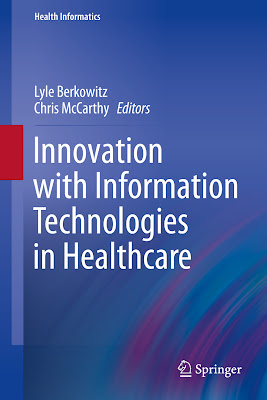
Three years ago I was asked by Marion Ball, EdD (a well respected informaticist and long-time colleague) to write a book about the intersection of healthcare IT and innovation.  I was smart enough to initially say no, but she kept asking because she knew I had been combining my long background in informatics with a newer interest in the science of innovation as part of the Szollosi Healthcare Innovation Program, a charitable organization I established in 2007 with a mission to use creative thinking and diverse technologies to produce a better healthcare experience for patients, physicians and others associated with their care.  

After about 6 months I finally accepted the challenge, realizing that since I was an early pioneer in this world of HIT meets innovation - I might as well try and give the area a good book.   I was wise enough to quickly get a partner in this endeavor, the amazing Chris McCarthy, MPH, MBA.  Chris is a friend and my #1 innovation mentor, as well as the Director of the Innovation Learning Network and an Innovation Specialist with Kaiser Permanente’s Innovation Consultancy.  We liked the idea of storytelling and wanted to make the book an enjoyable read about the many awesome healthcare innovators who have used IT to make the healthcare system better, faster and/or cheaper.  We also realized that it would make sense to truly hear the "voice of the innovators" by having them each write their own stories within the framework we created.

The result is our book, Innovation with Information Technology in Healthcare, which describes the stories of over 20 organizations who have combined innovative thinking with information technologies to improve their processes of care and solve a need at their organizations.

The first chapter sets the stage, describing how this work should be viewed like a big cookbook of recipes, with sections on EMR Innovation, Telehealth Innovation, and Advanced Technology Innovation (e.g. analytics, portals, mobile and gaming).  The second chapter describes the science of innovation itself, including an assortment of methodologies which help move the innovation process from ideation to prototyping/piloting to spreading it across an organization.  The authors, from Kaiser's Innovation Consultancy, give examples from the very real work they have done over the past decade.

The rest of the chapters are the stories, written by the innovators themselves, about what they did, why they did it, how they succeeded, lessons learned, and their plans for the future.   It is especially fun to read about the origins of these innovations and peer into how an organization moves from a problem to an innovative new way of doing things. I wrote a short editorial on the "Big Lessons Learned" from these stories, including the following ideas:
  • Use What You Have:  Our first group of stories highlights how a lot of innovation can be made with the underlying HIT you already have in place, especially EMRs.  Examples include use of messaging to support care coordination, CDS tools to support delegation of preventive care and other duties to staff, and reporting tool to identify adverse events.
  • Innovation is More Than Technology.  For innovations to succeed, it's critical to also address culture issues, new business models, legal and political hurdles, and process change.  And, of course, it's often a good idea to be innovative in doing so!  The stories about telehealth give some great examples of this!
  • Look Around.  Learn from all the new technologies and companies appearing in every aspect of our life... from mobile apps to business intelligence to RFID tools to gaming systems.  The final section on Advanced Technologies provides many examples of this rule. 
  • Dream Big (and Wild)!  We all are faced with problems in our healthcare organizations, and while sometimes the answer is a small improvement in what we do, in other cases we truly need to innovate - to rethink how we do everything and at that time it's important to come up with wild and crazy ideas which can really make a difference.  Don't worry, there will be time later to mix in reality and pragmatism - but in brainstorming, don't be afraid to dream big!  

Finally, it's important to understand that we don't expect readers to follow the exact "recipes" in the book, but rather to be inspired and educated to innovate themselves!  Ideally, you will see what others have done and find the "essential innovation" in each story and be able to apply that to your organization.  It is truly meant to serve as both an educational platform for stimulating ideas in any organization, as well as an inspirational read to help you realize that you too can innovate.  Whether you are a CEO, a CIO, a department head, a clinic manager, a physician, a nurse, an empowered patient, an EHR vendor, an HIT consultant, or anyone else involved in the healthcare system, we hope this book helps you in your quest for The Healing Edge!

Reviews, Editorials, Interviews, Webinars...

Sunday, April 29, 2012

EMR Apps Taking Off, Starting with Refill Requests

About ten days ago, the new Technology Editor for Healthleaders magazine (Scott Mace) interviewed me about a range of healthcare information technology topics, and within a week he put out an article - these writers are getting quick!   He was especially intrigued about healthfinch, the company I helped co-found last year to build HIT tools which, "make life easier for physicians, and better for patients".  We talked a lot about our first product, RefillWizard, which is an "EMR Extender Tool" that uses the new concept of "team-based decision support" to help improve efficiency (by task-shifting work away from physicians and towards their team) AND quality (by increasing compliance with protocols).

I've talked about these ideas in previous posts (Rise of the EMR Extenders, Need for New Clinical Workflows and EMR Usability Update), and have hinted that I was working on putting these ideas into reality... I guess now the cat is out of the bag!   So if you have an EMR in place and want to implement tools which actually decrease the amount of work your physicians have to perform (while improving quality and documentation), then check out what we are doing!

Of note, Scott did a great job of explaining our philosophy and I liked how he stressed the importance of getting clinically active physicians more involved in these types of companies.  He even says at the end that if someone like DrLyle can do this - then anyone can!!!  That's OK - I know what he meant :)

Here is the article, with a few addendum from me in brackets:


EMR Apps Taking Off, Starting with Refill Requests

Scott Mace, for HealthLeaders Media , April 24, 2012

Lyle Berkowitz, MD, has graced the pages of HealthLeaders Media before, but with the new twist his story is taking, healthcare technology leaders everywhere should take notice.

Berkowitz was one of the HealthLeaders 20 in 2008—"20 people who make healthcare better."  [At that time], Berkowitz had recently founded the Szollosi Healthcare Innovation Program while continuing his primary care practice at Northwestern Memorial Physicians Group, the largest primary care group in the city of Chicago.

Now, in addition to these ongoing duties, add entrepreneur to his CV. In the process, he's using more technology to disrupt current healthcare best practices.

"I'd argue that primary care physicians should never have to be directly responsible for preventive care measures," Berkowitz says. "When I say that, people gasp. But when you look at the most efficient clinics and some of the highest-quality clinics, they actually have shifted a lot of that work to nurses who are very focused on that particular issue."

Back in 2010, Berkowitz was speaking on this very topic at the Mayo Clinic's invitation on how EMRs could make doctors' lives easier. In the audience were two young aspiring consultants who got so excited about a mock-up Berkowitz was showing, they proposed a new company to put actions behind Berkowitz's philosophy and inspiration. Thus was born Healthfinch. Berkowitz is chairman and chief medical officer and leaves the day-to-day operation to his partners.

Today, Healthfinch ties into most popular EMRs and runs prescription refill requests through a Web service, making it simple for physicians to delegate those refill requests to nurses and other medical office support staff.

At Elmhurst Clinic, based in nearby Elmhurst, Ill., one physician using the Healthfinch service is seeing real productivity gains. He sees less than half the refill request messages he used to see, according to Elmhurst Clinic CEO Donald Lurye, MD, MMM, CPE.  [To clarify, it was one physician interviewed, but their group actually has over 50 doctors using the system and they are each saving around 15-30 minutes a day!]

"The management of refills is a major activity, particularly in primary care where you're dealing with a lot of people with multiple chronic illnesses, that can have complicated prescription regimens and necessarily so," Lurye tells HealthLeaders Media.

"Dealing with refill requests sounds simple but it isn't. Many times, there's a need for a physician taking a look at a chart to decide whether a refill is appropriate. It can involve checking to see whether various types of follow-up have occurred, or whether certain lab tests have been done in a timely manner, that either just need to be done for monitoring or should be there to guide the therapy."

Healthfinch's rules-based engine, configurable by the Healthfinch staff in collaboration with customers such as Elmurst, automates the decision-making and offloads it from doctors.

When I first heard of this concept, I figured there might always be some super-cautious, belt-and-suspenders type physicians who would still insist on checking every detail.

"First of all, the protocols that Lyle presented to us initially were very conservative, and correctly so," Lurye says. "In fact, in his own personal use, he was still looking at every refill request. He just wanted to see, 'Okay, these are the things I think can be done automated. Now let's see if I actually agree with myself.' And we did the same thing here. And we've kept it fairly conservative. So that's one answer.

"And again, if we ever needed to they're fairly easy to adjust."

As for the rest of the care team, "it really makes them feel much more like participants," Lurye says. Refill requests can be "opportunities for patient education and encouraging people to come back in for necessary care."  [It turns out that the Nurses and staff like it more than we initially would have thought - they love being able to answer patients more quickly rather than playing EMR message-tag with their doctors.]

Deployed initially in primary care, the Healthfinch service will find its way into Elmhurst's specialty practices, Lurye says.
Healthfinch is extracting info from the NextGen EMR in use at Elmhurst. I was surprised that existing EMRs don't yet have the refill-request-delegation features built into them.

"The evolution of EMRs didn't really come from the clinical side so much," Lurye says. "The real return on investment on EMRs initially was that they helped to do charge capture better and meet coding criteria for various types of visits. They've become over time much, much more clinically oriented, and that's great."

Berkowitz sees EMRs as a platform on which a multitude of apps can be built, much as apps now get built on mobile platforms such as Apple's iOS or Google's Android.

"EMR vendors are pretty much focused on Meaningful Use right now," he says. "Nothing in Meaningful Use really says, 'Make a tool that makes the doctor more efficient.' Our tool doesn't help Meaningful Use. It simply helps the doctor be more efficient and provide higher-quality care."  [I love this line!]

EMR vendors are beginning to open up their platforms to allow third-party vendors to build these apps. "Allscripts and Greenway are leading the charge," Berkowitz says. Others will follow. For now, that means apps such as Healthfinch have to find more cumbersome ways to extract and use data.  [We have built our systems in a way which actually makes it now so hard to get the data we need from EMRs.]

But clearly this notion of EMR apps is going to be much, much bigger than just delegating refill requests. The healthcare ecosystem, ranging from payers to caregivers and encompassing financial analysts, quality mavens, and researchers, is starting to tap vast quantities of patient data that will accelerate the pace of innovation in healthcare technology by leaps and bounds.

To me it's very encouraging that there are physician-leaders such as Berkowitz who, while keeping their day jobs, have found ways in their spare time to advance this ball. The message is clear to healthcare technology vendors: If the Lyle Berkowitzes of the world can get this done, you should, too—and more.  [Well... I've been waiting long enough - glad my hat is in the ring now!]


And here was a summary from another HIT blogger who picked it up the next day: http://www.hospitalemrandehr.com/2012/04/27/will-next-generation-emrs-be-platform-stack-of-apps/

Sunday, March 04, 2012

Meaningful Use - Part 2 Intro

The Notice of Proposed Rule Making (NPRM) for Stage 2 requirements for meaningful use of electronic health records (EHRs) was released by the Centers for Medicare & Medicaid Services (CMS) on February 23, 2012. There will be a 60-day comment period starting on March 7, and then a final rule will be published. The final rule is expected in the summer of 2012. Here are some key links and summaries:


Hints if you want to submit anything to CMS (from a HIMSS meeting with the CMS folks):
1. The best comments are well thought out explanations based on evidence whenever possible.
2. It is fine to comment as an individual, but of course it's more powerful if you comment as the consensus of a larger group.
3. Make sure to comment on both the pros and the cons.  If you just comment on the cons - then CMS needs to just focus on fixing those.  In other words, if you like something - let them know that too... otherwise someone who does not like the same thing will have more sway if they comment negatively about it and no one comments positively. 


Things I like include focus on CPOE and messaging.
Things which worry me include:
- The increase in eRx from 40% to 65%: As there are still many patients who want a printed Rx since they are not sure of their pharmacy address or want to shop around first; and not all pharmacies or PBMs accept eRx.  It's actually easier for docs to do eRx than print... but CMS has to understand that not all patients or pharmacies are ready for eRx yet.  Maybe going to 50% is a good compromise.
- Imaging requirement: As a PCP, do I really need to view the images of an xray... I am quite happy just seeing the report.  I don't think I am going to see anything the radiologist did not!  I am not sure if they are saying this requirement is for both inpatient and outpatient.
- Med Reconciliation: If a requirement for ambulatory care - I am curious on how they monitor it. On one hand, I do this every time I see a patient.  On the other hand, I don't use a special function to do this... so I am not sure how we measure it.
- Structured Family History: I am curious as to whether this will mean vendors create a new functionality for this since we've been using an older functionality for 10 years... and they might find it is easier to meet the letter of the law by using a new function rather than support an old one.


High level Summary (per HIStalk Blog)
The broad themes to be addressed in the Notice of Proposed Rule Making for Stage 2 are:
  • Increased emphasis on health information exchange.
  • Increased emphasis on patient engagement.
  • New requirements for hospital patient safety, specifically with regard to electronic medication administration records.
  • Requirements involving tying clinical decision support to quality measures.
  • A philosophical goal of flexibility and reducing provider and vendor burdens.

Specific issues are:
  • The Direct protocol will be required.
  • SNOMED will become the standard for encoding problem lists.
  • Infobutton (i.e. the blue button initiative) will be expanded, with requirements that patients be able to view, download, and exchange their own information. The proposed legislation calls for 10% of patients to actually do this.
  • While Stage 1 required theoretical information exchange capability in test mode, Stage 2 will require providers to exchange information “across organizational and vendor boundaries,” which also includes submission to public health agencies.
  • Encryption and usability requirements will increase.
  • Viewing of images will be supported as an optional item.
  • Physicians in group practice will be allowed to submit their quality measures electronically as a group.
  • Stage 1 will be extended for another year, though 2013 for those who first attest in 2011. Providers can then stay on Stage 2 for another two years.
  • The last date to attest without penalties will be October 1, 2014.
  • An increased emphasis will be placed on making referrals electronic.
  • Electronic submission to cancer registries will be added as a menu item.
  
SUMMARY OF KEY PROVISIONS IN PROPOSED RULE 
FOR STAGE 2 OF MEANINGFUL USE
(per a memo from the Global Institute for Emerging Healthcare Practices at CSC)
This memo provides a summary of the most significant changes and clarifications in the rule. A more detailed white paper will be published later. The Stage 2 proposed rules for meaningful use have many changes — some are subtle.
In addition to the new requirements to be a meaningful user of EHRs, there is one important clarification to the requirements for avoiding penalties. To avoid penalties starting in 2015 for not being a meaningful user, hospitals and eligible providers (EPs) need to either attest to meaningful use in 2013, or have achieved and attested to the first year of meaningful use by July 1, 2014 (October 1, 2014 for EPs).
As reported earlier, the requirement as to when different Stages of meaningful use need to be met was officially relaxed. Those that attest to meaningful use first in 2011 must meet Stage 2 criteria in 2014 and Stage 3 in 2016. All others will be required to demonstrate 2 years at Stage 1, 2 years at Stage 2 and then 2 years at Stage 3 (assuming the cut-off date for the program’s payments have not passed).
Quality measures are still not final, but in 2014 they will be submitted electronically. Quality measures are now a distinct category of meaningful use and the schedule is not tied to a particular Stage. In 2014, all those attesting to any Stage of meaningful use will need to electronically report the 2014 quality measures. The proposal is that EPs will submit 12 measures (some may be required, others selected from a long list of potential measures). Hospitals will select 24 measures (50 possible measures are proposed). In both settings, at least one measure will need to be reported from each quality domain: patient safety, care coordination, population and public health, efficient use of resources and clinical effectiveness. The final list of quality measures will be published with the final rule. This delay affects both users and vendors, vendors are likely to require significant development effort to be able to capture and report on the expanded list of quality measures.
There are many changes in requirements. The proposed rule generally makes Stage 1 optional (menu) items required (core) in Stage 2. Stage 2 does retain the concept of core and menu requirements for new requirements; for example use, of e-MAR is now a core requirement for hospitals and the ability to view images is a new menu requirement. Many of the thresholds from Stage 1 have been raised — some to a higher level than those recommended by the HIT Policy Committee. For example, the requirement for CPOE for medications is 30% in Stage 1, the Policy Committee recommended it be raised to 50% and the proposed rule raises it to 60%. Other new requirements include CPOE for laboratory and radiology orders, the ability of patients to view, download and transmit their health information, and public health reporting to cancer registries and other specialized registries. The CPOE measurement was changed from being based on one order per patient to a percentage of all orders — which will raise the bar considerably.
The only major recommendation from the policy committee that was not included in the NPRM was for an electronic physician note for 30% of office visits and 30% of hospital days. While no longer required for meaningful use, physician notes are a major source of data that will be required for electronic reporting of quality requirements.
To ensure that systems certified for Stage 2 can also meet Stage 1 requirements, a few Stage 1 requirements will be modified somewhat for 2014 onward. All the changes in requirements (even small ones) will have a major impact on vendors, since the entire installed base will need systems that meet these requirements. It is likely that vendors will only have the more recent versions of their products certified for Stage 2 — increasing the number of customers that will need a major upgrade.
The table below provides a summary of all the changes in requirements proposed for Stage 2. Hospitals will have 16 core (required) measures and must select two of four menu (optional) objectives. EPs will have 17 core objectives and be required to select three of five menu objectives.
Summary of Requirements for Stage 1 and Proposed Changes for Stage 2
Requirement
Stage 1 Final
Minimum Requirement
Stage 2 NPRM
Minimum Requirement
Maintain medication, problem/diagnosis, allergy lists
80% of patients have an entry or indication of none
No longer separate requirement, must be included in the electronic record for patient access and transmitted at transitions in care.
Demographics recorded
50% of patients
80% of patients
Vital signs recorded
50% of patients over 2
80% of patients over 3
Smoking status recorded
50% of patients over 13
80% of patients over 13
Family history
Not required
Menu item: 20% of patients have family history recorded as structured data
Computerized Physician Order Entry (CPOE)
30% of patients have a CPOE medication order if they have any med orders
60% of medication, laboratory and radiology orders entered using CPOE
Info on Advanced Directive
Menu option for hospitals — indicate if patent has advanced directive for 50% of hospitalized patients 65+
Remains menu item for hospitals.
Drug-drug and drug-allergy checking
Enabled
Enabled — now combined as one requirement for decision support
Drug-formulary checking
Menu option
Incorporated as a requirement for e-Rx
Medication reconciliation
Menu option, performed for 50%
Required
e-Prescribing
40% of prescriptions for eligible providers
Required — 65% of prescriptions for eligible providers
Menu 10% of new or changed medications for discharged hospital patients, must include a drug formulary check
Summary of care record transmitted between providers at transitions in care
Menu option, performed for 50% of transitions (can be on paper)
Required for 65% of care transitions; must be electronic for 10%
Ability to view images
No requirement
Menu option: 40% of all scans and images available for viewing on the EHR
Secure messaging
No requirement
10 % of patients have sent at least one message to eligible providers
Electronic medication administration (eMAR)
No requirement
Required for 10% of all medication orders for hospital patients

Wednesday, August 24, 2011

A Busy HIT & Innovation Summer - Book, Upgrades, Usability and ExpectED Highlight

Well... it's been a busy summer, and I have a lot of blogs in me, but have been diverted by two major issues going on which will eventually lead to some good blogs in the future:
  • The Book: I'm writing/editing a book on the intersection of HIT and Innovation.  It's been a great experience as we are putting together a series of essays from a variety of innovative physicians and healthcare experts on how they have used HIT in an innovative fashion.  These will range from using their EMRs in new and different ways, to a wide range of telehealth activities, to creating an online survey system which allows patients to become increasingly involved with an organizations strategic direction. 
  • The Upgrade: Our Cerner EMR was finally due for an upgrade... and after months of many people working together to make it happen, we had a very successful go live last week.  There are still a lot of busy days and late nights as we are in the fine-tuning stage, but it sets us up for MU and more abilities to start managing quality and providing even higher quality care... so yeah, I'm sort of excited about it!  Of course, now that I've delved into the world of EMR Usability, my eyes have been opened to usability heuristics issues like Consistency, Recognition rather than Recall, and the importance of expert Accelerators to promote more efficient use.  And so whenever I look at the new screens, I start thinking "how could this be better" and in talking to other "usability junkies" - it turns out this is a curse we now carry as we look at anything on the web or in the "real world" - why can't things be more usable!?
I've also gotten more involved with the government in the past year as the push to promote EMRs spreads, and they are looking for input from folks who have been involved in getting EMR systems up and running.  I had a particularly good time attending and presenting at the NIST EMR Usability Workshop in June.  I plan to dedicate a whole blog to my thoughts on this - but in the meantime you can read some of my ideas at the Healthfinch blog

Finally, I wanted to make sure everyone knows about the AHRQ Healthcare Care Innovations Exchange
The U.S. Agency for Healthcare Research and Quality (AHRQ) created the Health Care Innovations Exchange to speed the implementation of new and better ways of delivering health care.  The Innovations Exchange supports the Agency's mission to improve the quality of health care and reduce disparities.  The AHRQ Health Care Innovations Exchange offers busy health professionals and researchers a variety of opportunities to share, learn about, and ultimately adopt evidence-based innovations and tools suitable for a range of health care settings and populations.  More info at: http://www.innovations.ahrq.gov/about.aspx

In July of 2011, the AHRQ Innovation Exchange published a profile of ExpectED, one of the first projects from the innovation program I run - the Szollosi Healthcare Innovation Program (SHIP).  The profile was entitled "Referring Physicians Send Electronic Handoff Note with Pertinent Patient Information to Emergency Department, Improving Physician Efficiency and Quality of Care" and the summary was:
Community-based physicians referring patients to Northwestern Memorial Hospital for emergency care send an electronic handoff note to emergency department personnel to notify them that a patient will be arriving and to provide clinical details pertinent to his or her condition.  The note, which includes the patient's name, date of birth, the referring physician's name, a clinical summary, and other information, is entered into the system's electronic medical record, where emergency department clinicians can easily access and review it at the point of care.  Anecdotal feedback from physicians suggests that the program has improved physician efficiency and satisfaction, care coordination, and the quality and timeliness of care.
Direct link to the write-up is at: http://www.innovations.ahrq.gov/content.aspx?id=3107

They did a great job in this write-up, I love how they break each innovation down into: 
  • What They Did 
  • Did It Work?  (we can learn from failures too!)
  • How They Did It
  • Adoption Considerations

Take a minute to peruse the Innovations Exchange - it will expand your mind and make you feel good about the potential for innovations in healthcare care!  

Thursday, February 10, 2011

EMR's and Typewriters: They both have potential

A couple of weeks ago an article came out in the Archives of Internal Medicine which essentially said that "Ambulatory EMR's don't improve quality", based on a meta-analysis (review of multiple research published in the past few years). Wow - that's like saying 'typewriters don't help create better stories' just a few years after typewriters were invented because there wasn't a lot of evidence proving that they did.  Clearly I'm not a fan of this article.  Let me break it down as follows:

First, I personally think it is crazy to expect research on individual EMR implementations to mean anything right now - the systems are all immature and evolving quickly, the implementations are all different, and individual usage is all over the place. Any research that is done at one location at one time is pretty much limited to that place and time. It is not like a drug study, where the drug is made and used the same way every time and thus research will be consistent. It will be a long time before research on any single EMR provides any value except to show what the POTENTIAL is for EMRs - and since it is a tool, we already know that there is good potential if done well, and poor potential if done poorly. So what would be much more interesting and relevant would be if we could start by assuming EMRs have the potential to help (since we know some research studies show they can), and focused research dollars on figuring out WHY an EMR did or did not improve quality at a specific time and place - I bet we would really learn from that!

Second, the follow-up discussion in the Archives by Clem McDonald (a true father of medical informatics) highlighted multiple studies that did show benefits and had a good breakdown of why this meta-analysis was not very valid.  It is certainly worth a read, especially if you are getting asked by your friends at cocktail parties about "that report on CNN which said EMRs don't improve quality"… Now you can have some snippy comebacks like:

• "Sure, if you like meta-analyses which only include medication quality indicators, but I prefer my meta-analyses the way I get my annual physical exams - with vaccines and screening labs."
or
• "Those chumps only looked at single visit outcomes, not multi-visit ones- can you believe that?!?  And umm, pass the wine please."
Or one more provided by my friend and colleague Dr. Bill Galanter:
• "You mean the one that shows that the American healthcare system doesn't deliver reliable, quality care no matter what kind of tools you give them? Since in addition to the physicians, insurance reimbursement, short visits, ill-advised mandatory government regulation, uninsured patients, pharmaceutical advertising, a terrible diet, overly expensive drugs and EMR's, co-pays, donut holes (will come back if republicans get their way) and a trillion other factors are also to blame..."

Or you can quote Dr. McDonald specifically, who wrote:
First, and most important, the current article tells us nothing about which CDS guidelines were implemented in the systems that they studied. Practices and EHRs vary considerably in the number and type of CDS rules that they implement, and we do not know whether the CDS rules implemented by the practices that participated in the surveys addressed any of the 20 quality indicators evaluated by Romano and Stafford. Second, the current study and Garg and coauthors' review considered very different categories of guidelines. Most of the guidelines (60%) in Romano and Stafford's study concern medication use; none of them deals with immunizations or screening tests, which were the dominant subjects in the studies reviewed by Garg et al. Furthermore, in our experience, care providers are less willing to accept and act on automated reminders about initiating long-term drug therapy than about ordering a single test or an immunization. The third difference is that the current study examined the outcome of a single visit, while most of the trials reviewed by Garg and colleagues observed the cumulative effect of the CDS system on a patient over many visits. Finally, the data available from NAMCS/NHAMCS may be limited compared with what is contained in most of the EHRs used for Garg and coauthors' trials. For example, the NAMCS/NHAMCS instruments have room to record only 8 medications, even though at least 17% of individuals older than 65 years take 10 or more medications.

Finally, this whole issue reminds me of what Don Berwick has been preaching for many years… that the way academic researchers study the effect of a new medication or procedure is great for those scenarios, but is not so good in studying the process of quality improvement, which usually relies on a combination of factors, including IT, cultural shifts and process changes. In this 2008 JAMA article called "The Science of Improvement" he explains how to improve the measurement of quality improvement programs:

Four changes in the current approach to evidence in health care would help accelerate the improvement of systems of care and practice. First, embrace a wider range of scientific methodologies. To improve care, evaluation should retain and share information on both mechanisms (ie, the ways in which specific social programs actually produce social changes) and contexts (ie, local conditions that could have influenced the outcomes of interest). Evaluators and medical journals will have to recognize that, by itself, the usual OXO experimental paradigm is not up to this task [observe a system (O), introduce a perturbation (X) to some participants but not others, and then observe again (O).]. It is possible to rely on other methods without sacrificing rigor. Many assessment techniques developed in engineering and used in quality improvement—statistical process control, time series analysis, simulations, and factorial experiments—have more power to inform about mechanisms and contexts than do RCTs, as do ethnography, anthropology, and other qualitative methods. For these specific applications, these methods are not compromises in learning how to improve; they are superior.

Second, reconsider thresholds for action on evidence. Embedded in traditional rules of inference (like the canonical threshold P<.05) is a strong aversion to rejecting the null hypothesis when it is true. That is prudent when the risks of change are high and when the status quo warrants some confidence. However, the Institute of Medicine report Crossing the Quality Chasm calls into question the wisdom of favoring the status quo.

Auerbach et al warned against “proceeding largely on the basis of urgency rather than evidence” in trying to improve quality of care. This is a false choice. It is both possible and wise to remain alert and vigilant for problems while testing promising changes very rapidly and with a sense of urgency. A central idea in improvement is to make changes incrementally, learning from experience while doing so: plan-do-study-act.

Third, rethink views about trust and bias. Bias can be a serious threat to valid inference; however, too vigorous an attack on bias can have unanticipated perverse effects. First, methods that seek to eliminate bias can sacrifice local wisdom since many OXO designs intentionally remove knowledge of context and mechanisms. That is wasteful. Almost always, the individuals who are making changes in care systems know more about mechanisms and context than third-party evaluators can learn with randomized trials. Second, injudicious assaults on bias can discourage the required change agents. Insensitive suspicion about biases, no matter how well-intended, can feel like attacks on sincerity, honesty, or intelligence. A better plan is to equip the workforce to study the effects of their efforts, actively and objectively, as part of daily work.

Fourth, be careful about mood, affect, and civility in evaluations. Academicians and frontline caregivers best serve patients and communities when they engage with each other on mutually respectful terms. Practitioners show respect for academic work when they put formal scientific findings into practice rapidly and appropriately. Academicians show respect for clinical work when they want to find out what practitioners know.

Additional Studies/Articles on this subject
* Health Affairs article (March, 2011) from Dr. Blumenthal: Meta-Analysis of recent studies shows more positive effect of EHRs on quality (less on provider satisfaction).

Monday, January 31, 2011

What Motivates us? Autonomy, Mastery and Purpose.

My friend Shelly posted a great video the other day entitled "Drive: The surprising truth about what motivates us", (video is below).  It's a fun, quick breakdown of Daniel Pink's book of the same name, which illustrates the hidden truths behind what really motivates us at home and in the workplace.   He starts out by laying this on us: "Our motivations are unbelievably interesting and the science is a little freaky! We are not as predictable as we think."


What really motivates us?  Once basic money is off the table (i.e. get enough to buy the basics), there are really three main things that drive us:

1. Autonomy:  We like to be self-directed.  Pink says employers should realize their employees probably want to do something interesting, they just need to get out of their way.  

2. Mastery:  It is fun and satisfying to get really good at something (i.e. learning the guitar, working on open source software).
 
3. Purpose:  We want to feel we are doing something important with our lives. Additionally, when the profit motive is not aligned with the purpose motive, bad things happen - a common problem in healthcare!

I think these apply very well to a physician's life, and explain why we will push ourselves very hard - we enjoy our autonomy, we enjoy mastering our skills, and our high level purpose is fulfilling.   However, what we don't like is when others try and tell us what to do (i.e. insurance company, poorly designed clinical decision support), when we are told to master something we don't particularly enjoy (i.e. not all doctors love EMRs - especially when they are really hard to master), and when we start feeling like our purpose is to make someone else money instead of focusing on patients.  

As for patients, I think this theory helps explain why we fail so often at helping them make significant lifestyle changes.  They need to feel they are doing it themselves (autonomy), they need to find something they enjoy mastering (a lot of people don't like exercise), and they need to see a tighter link between their actions and their ultimate "purpose" (which is likely to be healthy).

So as we talk about further implementing EMRs, expanding insurance access, reforming reimbursement schemas, and changing the very nature of patient care... let's remember both patients and physicians are still human, and will be driven by these age old motivations.  In other words, when making a change... think deeply about how you can best align autonomy, mastery and purpose - and you will clearly improve your chances of success!

Saturday, January 22, 2011

DC Hearings for Meaningful Use

I went to DC earlier this month to speak at a governmental "hearing" about Meaningful Use.  Since the Feds are about to spend up to $40 billion on creating incentives for EMRs - I give them credit for wanting to make sure they hear as early as possible if there might be problems with their program.

I blogged about my experience at the HISTalk Blog, so full details are here:
 http://histalk2.com/2011/01/18/the-mu-hearings-drlyle-goes-to-washington-11811/

For those who just are looking for a quick summary, here you go:
ONCHIT's Implementation Committee wanted to hear from Eligible Providers (EPs) and Hospitals about their early experience in preparing to meet MU requirements for this year. 

The good news is that this bill has indeed "stimulated" many organizations to move forward with various upgrades and focus on how to produce quality reports from the data in their EMRs.  But mostly we heard about the challenges:
• This is hard. It’s not impossible, but it’s a higher bar than many had anticipated because the requirements are not simple, nor are they fully explained.
• Time crunch. There is a very tight time frame between the release of the requirements, embedding them into EMRs, the "rollout" of the new EMRs, and the updating of workflows and reports to ensure users are actually meeting the MU requirements.
• Resource crunch. This is often a zero-sum game with resources.
• We need more flexibility. Not every practice is the same, and requiring 100% mandate of every requirement is not reasonable.
• Functionality is not the same as usability. An EMR vendor can get MU certification for their functionality whether their usability is great, good, or poor. Fortunately, the government is starting to look into usability requirements for the certification process, so let’s hope they follow through on that sentiment.
• Standards. "We’d rather have one bad standard we can work with than three good ones without a clear winner." On the other hand, we should make it clear we do NOT want the government to make standards about actual functionality – we can and should be creative in that domain.
• The cost of implementing MU may often be more than the actual monies themselves, when you factor in costs for various software upgrades, consultants, and change management.
• Certification requirements don’t always exactly match MU process requirements. Someone has to keep a better eye on this.
• Communication with CMS and ONCHIT has not been easy.
• The result of most of the above is that the biggest and the best are struggling with MU… so you have to wonder, how much harder will it be for others?

It has been interesting that this is in stark contrast with recent ONCHIT announcements about a recent survey showing that the majority of doctors plan to apply for MU.  However, let's be serious - most docs don't even know what MU means, and less than 25% even use a "basic" EMR (and under 10% use an "advanced" EMR).   So if a doctor gets asked, "Do you plan to apply for free money from the government for using EMRs in the coming years?"... it should not be a shock that most will say, "Sure, I'll give it a try."  

I know ONCHIT is trying to keep an optimistic view here, but I wished they spent some time at these hearings listening to real world users and less time crowing about a survey asking a hypothetical question.  In fact, no one from ONCHIT actually came to these hearings - even though they paid for people from all across the country to fly in (to be fair and balanced, someone from ONCHIT did listen on the phone during the morning session, and the Committee did summarize and report to ONCHIT later on).

I think we all agree that ONCHIT's goals are noble, but if they don't get feet first into the reality of the situation, they will have a hard time getting there - these hearings were a good step in the right direction, and I hope they continue to keep their ears on the ground and make adjustments as appropriate.

Relevant Links
- Full details and testimonies from the hearings
- Review of the different types of ONC Certifications

Sunday, September 26, 2010

The Real EMR Incentive: We want LONG-TERM EFFICIENCY, not short-term funding!!!

This is a mantra I have long been espousing, and it was nice to see a recent report from the CapSite research firm backing up this assertion.  More specifically, this study of more than 2000 medical groups across the US found that "the most important reason driving Ambulatory EHR purchases was the goal of physicians making their practice more efficient and not the ARRA / HITECH Act Stimulus funding".

Said another way, to get real adoption - we need to figure out how to promote USABILITY not just Certification.  And let's continue to move from the inefficient paper-based paradigm (EMR 1.0) to the much more appropriate web-based or iPhone paradigm (EMR 2.0).   My last post, which talked about "The Future of EMRs", provides more details on this idea.  And I am looking forward to learning more on this topic when I go to SanFran this week for the "Annual Meeting of the Human Factors and Ergonomics Society" - where I will be listening to the top experts across all fields, as well as speak on a panel of EMR aficionados discussing the importance of improving usability of these tools.

So what can we (especially the government) do if this concept is true (the key to adoption is Efficiency)?  Maybe we should reconsider how we spend the $30+ billion in HITECH funds?   Perhaps instead of giving "relatively" small grants to a lot of doctors, we use the money to help the whole industry create more Efficient and Usable products?   Myself, and others, have brought up this concept before (see "How should we use $36 billion to promote EMRs").   But it becomes more relevant when one of their own ask the question, which just happened:

As reported in this article, at a recent DC conference, former Secretary of the Treasury Paul O'Neill (who has authored academic papers on patient safety with current Medicare chief Dr. Donald Berwick and Lucian Leape) posed a technical question to keynote speaker Dr. David Blumenthal, the National Coordinator for Health Information Technology: "Why is it that we're reluctant to declare that we are going to design the best prototype that we can with an idea that we will have [iterative versions] as we learn more and we identify more needs?  Why is it that we can't call to question and get on with what's a clear and apparent need for a national standard that's a work in progress?  It's not that it has to be perfect from day one, but your office basically says, 'We're going to do this now?'," O'Neill said before a packed house of doctors and administrators of corporatized health systems. 

Dr. Blumenthal's answer did not clear things up as he talked about analogies to the interstate highway and the Internet - which actually seemed to hurt his own conclusion.  In other words, if you look at those government investments - you see that they created the infrastructure upon which others could build.  They did not involve the government giving money to end-users (e.g. local truckers) to buy and install concrete paths themselves, nor did the government give money to Internet end-users to buy and install web-servers themselves.  And yet, here we are - giving money to end-users (physicians) to buy and install a variety of proprietary systems that don't talk to one another without heavy lifting since each vendor creates their own versions of the concrete road - with proprietary data models and back-end functionality.

If the government believes in these past analogies - then they need to reconsider how they distribute their EMR monies...perhaps building a single standardized EMR platform (like they do with highways or Internet protocols) upon which the vendors can add their "value" and healthcare providers and patients can benefit from consistency and competition around the key issue at hand - Efficiency.

Monday, September 20, 2010

Mayo Clinic Center for Innovation: 2010 Transform Symposium

I finally visited the Mayo Clinic this past week!  I was there for the Mayo Clinic's Center for Innovation Annual Conference - The 2010 Transform Symposium, where the theme was "Thinking Differently about Healthcare".
I got a tour of the Clinic, as well as their Innovation Center… so you can imagine, I was like a kid in a candy store!  The Mayo Clinic has a culture of innovation that starts with "Drs. Will and Charlie" (the Mayo Brothers) as well as their father (William W. - who mortgaged his house to get a crazy device called a microscope so he could study disease better).   And while this is part of their culture, they also recently recognized the importance of having a full Center dedicated to expanding on this arena - thus launching their Center for Innovation in 2008, which now includes around 50 people - a very impressive size.

There were some great people and speakers at the conference. I was inspired in various ways - including the need to eat better (more whole grains, less processed foods and fats), the need to walk more (NEAT = Non-Exercise Activity Thermogenesis), the need to relax in whatever manner works for you, and the importance of living and working in a space that is designed well.  I realize those don't sound like they actually met the theme of the conference (since we've been preaching those themes for a long time) but it was how these people said it and what they are doing differently that made an impact.

The first speaker (Dr. Coombs, president of the Mass Medical Society) pointed out the importance of both empowering patients to ask questions AND giving them resources to find answers.  Jaime Heywood (PatientsLikeMe) always gives a great talk about the power of patient data.  Mrs. Q (who blogs at "Fed up with School Lunch") made me very happy my kids are in a school that treats lunch with respect.  Dr. Dean Ornish opened my eyes once again to the importance of Lifestyle and a focus on "health care, not sick care" (FYI - he also told us Medicare is now paying for wellness programs - wow!).  And the conference walked the walk by having a fantastic chef make healthy and delicious meals and snacks for us the whole time - check out his recipes at NewTaste.com.  Various Design experts gave examples of the importance of their work. And anything by Sekou Andrews (a "spoken-word artist") was amazing.

I was fortunate to have a little time on stage as well to present some of the work we've been doing with the Szollosi Healthcare Innovation Program (http://www.theshiphome.org/) around "Thinking Differently about EMRs" (Electronic Medical Records).  The summary is that today's systems (EMR 1.0) are failed paradigms which try to simulate paper rather than try to take advantage of what computers can do well - information visualization, predictive analysis, etc.  Part of this is due to doctors and IT people who don't understand the difference between tasks/workflow and "thoughtflow".  Another part is due to the vendors who don't utilize true information designers in creating their systems, and the last part is due to the evolution of monolithic 3-tiered siloed systems which don't allow for easy innovation (see the NRC Report for more details).  I then displayed a few screen shots of the potential for future systems (EMR 2.0) - to hopefully stimulate the audience into realizing we can do better.  This was similar to a talk I gave in 2009 at HIMSS - here is a blog with the slides.

Finally, kudos to the Mayo Center for Innovation (and particularly Dr. David Rosenman, the conference coordinator) for an excellent meeting.   For more thoughts on the conference - check out the Mayo Center for Innovation's Blog.


Monday, August 02, 2010

DrLyle's Take on the Meaningful Use Rules

I wrote up some notes about MU last week and the folks at HISTalk published it - here is the link to that posting (as well as some interesting comments from others):
DrLyle's Take on the Meaningful Use Rules 7/30/10

And here is the text from that post, with links to resources on the bottom:

In mid-July, the government released the final rules on MU and EHR certification. I was actually at the perfect place for this — the annual meeting of AMDIS (Association of Medical Directors of Information Systems). So we had 200 CMIO-type docs and a panel of speakers ready to talk about this topic. HIT geek heaven!

From my bias of focusing on ambulatory EMRs, here is what I learned at this meeting from listening and talking to some very smart people on the topic and reflecting on everything the past few weeks:

Big picture stuff
MU Rules are reasonable. The government listened to the end users and decreased the expectations on the "Core Rules" (decreased the percentage of eRx required), while putting other rules in an optional "Menu" (i.e. choose five of 10). But be aware, anything optional you don’t do in Phase 1 will be required in Phase 2 in 2013 (i.e. you’ll need to do 10/10 from the Menu)… and they will likely think of more things to add by then.

MU Rules are still not a slam dunk. Even for mature users, there will be work that needs to be done. It is hard to believe that a non-mature user, or users without a lot of resources, will be able to easily accommodate everything.

The government seems to think this will really work well and we will see over 50% adoption by 2015. I would love that, but am less optimistic. Best quote I have heard is that MU incentives are like giving someone money to have a baby. You will have a baby if you want a baby. The money is a nice extra, but not the main driver. Change is hard, so I am hoping that while we keep asking vendors and users to add functionality, we consider how we can improve usability at the same time.

I do hope the government is at least working on a secret Plan B in case 2015 comes and we are only at a fraction of where we need to be (e.g. maybe they give money to innovation think tanks to figure out better EMR user interfaces). If you want to read more about the rationale behind having a Plan B, check out the great Kuraitis/Kibbe blog on this topic.

Per John Glaser, we need to think about MU not as a simple, one-time incentive, but rather as a stepping stone to bigger reimbursement reform. In other words, it helps groups create the HIT foundation for alternative care models and payment reform of the future (e.g. Medical Homes, ACOs). In that future, an EMR is no longer a competitive differentiator, but rather how we use our EMRs will be the differentiator (e.g. care efficiency and improvement, use of clinical decision support, secondary use of data, and patient engagement).

Some details that popped out at me
1. The denominator is now "unique patients" rather than patient visits. So if a patient is seen three times in a year, you just have to fulfill the rule at least once for that patient.
2. Scoring will be done on an individual physician basis, not on a group-wide analysis.
3. To correctly measure many of these details (e.g. give clinical summary to 50% of those who ask) we would need to figure out a way to keep track of who "asks". That seems like a strange request for structured data and certainly should not be what a doctor is spending his time doing. So either we need to make it an easy administrative chore or consider doing it for 100% of people automatically.
4. For patient reminders (for patients over 65), physicians can decide content and format. For example, we can decide to just do colonoscopy reminders and only do it via mailers to patients — it does not have to be electronic. The point is to just prove we can identify patients by age and communicate with them in some way.
5. Patient education. We need to figure out a way to document when we provide these handouts. Some EMR systems may have that built in, but even then, just for the handouts they have. What if I go online and print something else out? Or give them a special handout I have created? We may need to create a special patient education section to document this, but it is again more busy work for physicians (which I am not a fan of!).
6. EMR vendors are on the hook. They are required to ensure some level of MU reporting from their EMRs to get certification. The result will likely be that they will be spending a lot of extra time and money preparing their EMRs and then trying to get everyone to take those upgrades. They will then likely just certify the most recent version of their system.
7. EMR users need to upgrade, due to above point. It is unclear how all current EMR users are going to be able to quickly upgrade their systems in the coming 6-12 months. That takes a lot of planning, time, resources, and money. I wonder if users of "older versions" will band together to try and get their older versions certified, or if the vendor will help at all?

Resources
• The NEJM summary from Dr. Blumenthal
• A summary from Computer Science Corporation (CSC)
•  Full text of the MU rule from HISTalk
MU PPT Slides from CMS
* The HHS FAQ about MU